Who Can It Be Now?
Patrick Edward Putnam was born in Bethel, Vermont, on December 3, 1953. There have not been many major leaguers born in Vermont -- 38 total as of the end of 2015 -- and only 6 have made their debuts since 1965. Those include Carlton Fisk, Putnam, Len Whitehouse, Mark Brown, Chris Duffy, and Daric Barton.
As the always excellent source of a SABR biography for him notes, Pat grew up outside Burlington. Luckily for Pat's baseball career, his father's job transferred him to Fort Myers, Florida, when Pat was 8 years old. Pat first attended Miami-Dade North JC on a baseball scholarship, and then went to play at the University of South Alabama under the legendary Eddie Stanky.
After his Junior College graduation, Putnam was selected by the New York Mets in the 12th Round of the 1974 draft but chose not to sign and went to USA (then SAU). The next year, he was drafted in the 1st round of the June secondary draft by the Rangers and chose to sign.
He first reached the major leagues in 1977, but Putnam's major league career took off in 1979. He finished tied for fourth in the Rookie of the Year voting thanks to hitting 18 HR in 139 games for the Rangers. He followed that up in 1980 with a 18 HR season -- both of which were punctuated with an OBP of .319. The problem for Putnam, though, was that the Rangers fell in love with Mike Hostetler in 1982. So, after the 1982 season, he was traded to the Seattle Mariners for a journeyman-type pitcher named Ron Musselman.
Putnam looked like a genuine steal for the Mariners in 1983 when he hit 19 HR and drove in 67. But, once again, his team fell in love with a rookie at first base -- this time, in 1984, the rookie was Alvin Davis who was a far better hitter than Putnam, who found himself traded at the end of August to the Minnesota Twins.
At the age of 31 and for the 1985 season, Putnam served as a Triple A insurance policy for the Kansas City Royals. Tiring of that role and not having a family to consider as a single man, Putnam signed on with the Nippon Ham Fighters for the 1986 season. He did so well there -- .286/.355/.478, 25 HR, 78 RBI -- that he stayed another year. His 1987 season in Japan was his last real professional season, not counting the Senior League.
Mustache Check
It's not the best photo of him, but pretty much every Pat Putnam photo and card available shows Pat as clean shaven. So, I'm guessing that he is here too.
Totally Gnarly
Putnam had a reputation early in his career as being something of a nutjob. As the 1980 Topps blog noted, the Sporting News from June 7, 1980, said that "Putnam belongs on any all-whacko list for his proclivities of eating dog biscuits, imitating Shamu the Whale in the whirlpool and assorted other eccentricities."
No wonder he's still a bachelor.
A Few Minutes with Tony L.
Maybe it was just holiday boredom that overtook me, but I decided to post here again today. Maybe if try I do one of these a week or two a month or something, I'll have the time to do it.
In my head, when Pat Putnam's name comes up, he's a Mariner -- despite the fact that he spent less than two full seasons there. That is almost certainly a recency bias on my part. Well, that and the 19-homer season he had that year.
Putnam spent most of his post-baseball life as a businessman in his hometown of Fort Myers, Florida. He started a company called Home Environment Center, which (the SABR biography tells me) specialized in "air and water purification." It appears that Putnam may have retired from that company in the past few years after the SABR biography was written, as the company is no longer an active Florida Corporation.
I'm not 100% sure what Mr. Putnam is up to these days, though it's possible that he is a member of the Lee County Tennis Association who is responsible for dealing with people interested in playing pickleball at Waterway Park on Poetry Lane in North Fort Myers. I mean, I could call the phone number on that page and ask if that person is the same Pat Putnam, but that feels a bit intrusive to me.
Showing posts with label Mariners. Show all posts
Sunday, January 3, 2016
Card #149: Pat Putnam
Wednesday, November 12, 2014
Card #130: Julio Cruz
Who Can It Be Now?
Julio Luis Cruz (Baseball Reference says Louis, The Baseball Cube says Luis) was born on December 2, 1954, in Brooklyn, New York. Growing up in Brooklyn, he played baseball in the Williamsburg neighborhood in Brooklyn to stay out of trouble. Baseball Reference's Bullpen says (without a cite, unfortunately) that Cruz said that he was not the best baseball player in the neighborhood, but that the players who were better did not avoid trouble.
Well, let me correct that statement a bit. The Bullpen is a great source of information, but they got this one slightly wrong. Cruz did not play baseball as a kid -- he played stickball. The 1984 article linked above mentions that the first time Cruz actually played baseball was not until later in his life -- after his family moved to California. Before that, it was stickball in the street from dawn till dusk until he reached 9th grade.
His family moved to Southern California when Cruz was 16, so Cruz attended Redlands High School in Redlands, California (a suburb of San Bernardino). In high school, Cruz played baseball (of course) and, despite his 5'9" stature, basketball. On that same basketball team and in the same high school class (1972 graduates) with Cruz was Super Bowl winning NFL coach and current NFL Network analyst Brian Billick.
Cruz was not drafted out of high school, and he stayed close to home and played at San Bernardino Valley College. After his second year of school, Cruz was working out with friends at UCLA when a California Angels scout saw him playing. The Angels signed him on as an undrafted free agent in May of 1974.
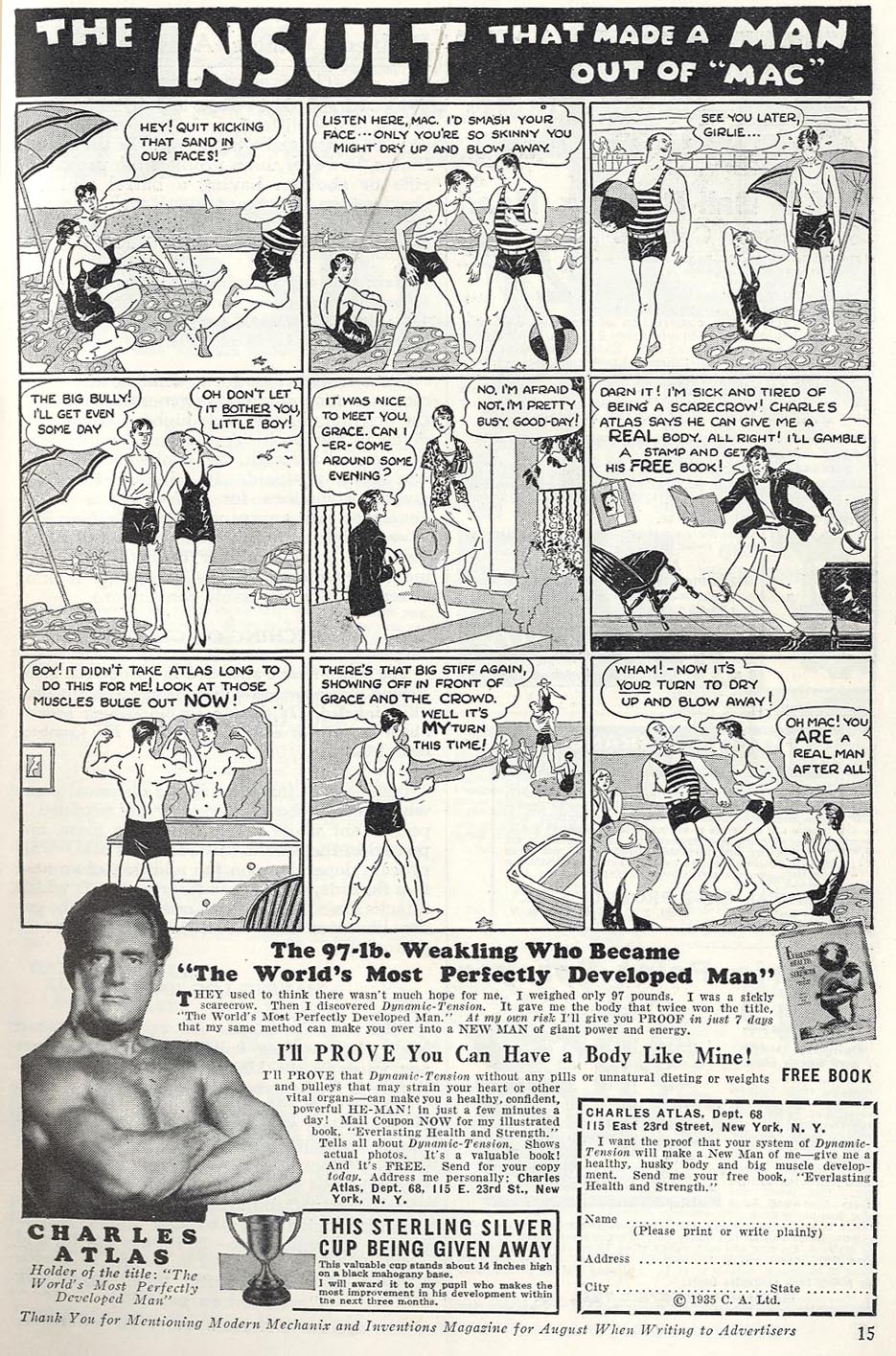
Cruz was assigned to Idaho Falls in the Rookie Level Pioneer League for the 1974 season. There, Cruz put up a fairly typical Julio Cruz season -- plenty of stolen bases (34, against 11 CS), a so-so AVG (.241), a stellar OBP (.361), and a SLG (.266) based off power numbers (4 2B, 1 3B, 0 HR) that would make Charles Atlas's comic book 97-pound weakling feel okay about kicking sand in Julio's face.
California's organization was intrigued, however, by his speed and his glove, so Cruz moved up to the Midwest league in 1975. He blossomed there in terms of base-stealing -- swiping 60 bases in 68 attempts -- and in getting on base, walking 70 times in 452 plate appearances. That led the Angels to push him more quickly through the organization in 1976, with Cruz going from the California League at the start of the year (68 steals in 81 attempts, .307/.433/.368) to Double-A El Paso for about two or three weeks (13 games) and to Triple-A Salt Lake City by the end of the season.
He struggled some in Triple-A hitting-wise -- .246/.312/.333. Perhaps the quick movement up the ladder was to see if the organization wanted to use one of its roster spots to protect him from the expansion draft. With his relatively poor showing in a small sample in Triple-A, the Angels did not protect him. As a result and in the fifth round of the 1976 Expansion Draft, the Seattle Mariners selected Cruz with the 52nd pick.
After half a season at Triple-A Hawaii, Cruz got the call to the major leagues and appeared in his first game on July 4, 1977. Leading off and playing second base, Cruz started the game with a fly out against his future team, the Chicago White Sox. In the bottom of the fourth inning, Cruz singled off Francisco Barrios for his first major league hit. Cruz was then caught stealing. Oops.
Cruz's Seattle career was marked by three things. First, Cruz was always in the top 4 in stolen bases in the American League without ever leading the league. After his half season in 1977, Cruz finished 2nd in 1978 (59 SB), 3rd in 1979 (49), 4th in 1980 (45), 2nd in 1981 (43), 3rd in 1982 (46), and 4th in 1983 (57 in the season split between Seattle and Chicago).
Second, as soon as Cruz was eligible for contract arbitration, he and the Mariners ended their contractual negotiations every single year in arbitration. The Mariners won three of four years against Cruz in arbitration, but doing that year after year took its toll on Cruz's attitude toward the team. It probably did not help that, as the linked story shows, then-Mariners owner George Argyros was calling Cruz out after the 1982 season and, further, claiming that Cruz shouldn't have won his arbitration case after the 1981 season -- or that, after Cruz won his case that year, GM Danny O'Brien said, "We thought our case was much stronger. Now the pressure is on Julio. He has been very unhappy losing the past two year. Now we'll see how a happy second baseman plays."
The final thing marking Cruz's time in the Pacific Northwest was being a part of absolutely terrible baseball teams. From 1977 through 1982 and through June 14, 1983, the team record was 391-590, a .399 winning percentage. Getting traded on June 15, 1983, to the Chicago White Sox straight up for Tony Bernazard (who was traded to Cleveland after the season ended) had to feel like being paroled from loser's prison for Cruz. The trade was called the 22nd worst trade in Seattle Mariners history by the Seattle Sportsnet blog.
Cruz enjoyed winning the American League West title with the White Sox in 1983 enough to re-sign with the Sox to a 6-year contract worth between $3.6 and $4.8 million. Hailed at the time as a huge victory for the White Sox to retain the player that many called the catalyst for the Sox division title, it turned into an albatross of a contract for the White Sox. Cruz started suffering from turf toe -- in medical terms, a metatarsophalangeal joint sprain (a tear in the connective tissue between the foot and one or more of the toes).
After suffering the turf toe injury, Cruz was not the same player for the obvious reason that speed was literally most of his game. As a White Sox player, Cruz hit .224/.309/.380 over four seasons. After a 1986 season in which Cruz continued to struggle with injuries (playing just 78 games in the field), the White Sox traded for Donnie Hill and Fred Manrique to replace Cruz.
Cruz came to spring training with the White Sox because they could not trade him away to anyone. So, instead, viewing the $900,000 in salary and $5.64 million in deferred payments as sunk costs, the White Sox released Cruz in late March of 1987. Cruz played in 30 games for the Dodgers Triple-A affiliate in Albuquerque in 1987 with little success at the plate (.174/.319/.217) and followed that up by playing with the independent Fresno team in the California League in 1988 for 41 games. After similarly terrible hitting there -- .199/.305/.213 in Single-A...really -- Cruz did not continue playing in organized baseball.
Mustache check: Cruz is clean shaven. Doesn't he know that this card would be shown 32 years later in Movember?
Trivial Pursuit
Cruz tied an American League record in 1981 by stealing 32 straight bases without being caught. Since that time, Ichiro, Time Raines, Paul Molitor, and Brady Anderson have all passed the record, with each of them stealing at least 35 in a row. Ichiro is the AL record holder at 45 straight, while Vince Coleman is the overall record holder with 50 straight steals without being caught.
This Is Radio Clash
From 2002 to 2010, Cruz served as a Spanish-language color commentator for the Seattle Mariners. Yes, despite his continual fighting with the Mariners ownership as a player, Cruz settled in the Pacific Northwest and never left. When he got the job, he joked that he might have problems with the job because:
The thing is, most Latinos out there are of Mexican descent, and some of my words are bad words. I speak sort of a Puerto Rican slang. I could be in trouble. You might hear a lot of beep beeps. People will think it's Ozzy OsbourneA Few Minutes with Tony L.
Julio Cruz was always a player who instilled fear when he was on the basepaths. He was a very smart baserunner when stealing bases. Over the course of his career, he was successful on 343 of his 421 attempts -- a success rate of 81.5%. That's far better than the breakeven point of around 66%.
One thing I do remember, though, was that Cruz never seemed to hurt the Brewers. My recollection on that is backed up by stats for a change: he never homered against Milwaukee and hit just .231/.313/.298 against the Brew Crew.
After his career as a player ended and for the most part, Cruz stayed in the Seattle area. He managed Pulaski in the Appalachian League in 1997 in the Texas Rangers system, but that was his only minor league management experience that I can find. He did coach in the minors for at least three organizations, according to the Seattle Times. A couple of years after his managing experience and in 1999, he became the baseball coach at Eastside Catholic High School in Seattle along with former Mariners pitcher and teammate Bill Caudill.
He was awarded the 2011 Moose Clausen Community Service Award by the Mariners RBI Club as a "past or present member of the Mariners community who has made significant contributions to the community." He remains a much-loved part of the Seattle baseball community today.
Labels:
Baseball Man,
Julio Cruz,
Mariners,
This Is Radio Clash,
Trivial Pursuit
Thursday, August 28, 2014
Card #98: Terry "Bud" Bulling


Who Can It Be Now?
Terry Charles Bulling -- known to friends and family as Bud -- was born on December 15, 1952 in Lynwood, California. Bulling went undrafted out of Lynwood High School. As a result, he attended Golden West College (a junior college) in Huntington Beach, California before transferring to Cal State-Los Angeles.
He finished his collegiate baseball career at CSULA and was drafted in the 14th Round of the 1974 June Draft by the Minnesota Twins. He signed with the Twins and was assigned to the Midwest League. He stayed there for the next two seasons. He earned a promotion to Double-A Orlando after a 1976 season in which he hit .310/.463/.426 -- yes, that OBP is correct and came on the strength of a 102 walk/33 strikeout season. Even though Bulling was 2 years older than the average player, that's still a good batting eye.
The next season, in 1977, Bulling was called up midway through the season. The Twins pretty clearly viewed him as a backup catcher candidate, and they did not need much more than that from him. After all, they had 21-year-old All-Star Butch Wynegar on the roster. Indeed, Bulling coming to Minneapolis was purely a function of necessity: backup Glenn Borgmann got injured and placed on the disabled list, so the Twins called up Bulling to watch Wynegar catch.
The next season, however, Borgmann was healthy. Perhaps Bulling's .158/.270/.188 slash line also helped with the decision, but Bulling was sent back to Double-A Orlando. The Twins felt pretty well set at catcher going forward -- not only with Wynegar but also because of the fact Bulling got passed in the organizational set up by Sal Butera -- so, near the end of spring training in 1979, the Twins sold Bulling's contract to the expansion Seattle Mariners.
The Mariners had just begun play as a franchise two seasons earlier, and their catching situation was far less settled. Having cycled through catchers Larry Cox, Bob Stinson, Bill Plummer, Kevin Pasley, and Skip Jutze by the end of 1978, Bulling had to be pleased to go to another organization -- especially one closer to his West Coast upbringing. He joined Triple-A Spokane for the 1979 season and played for the Indians for two seasons.
Finally, in 1981, the Mariners gave Bulling the opportunity to break camp as a major leaguer. He played in the first game of the season, and he platooned at catcher with lefty hitting Jerry Narron. Bulling performed decently in that strike-shortened season, hitting .247/.341/.305 (an OPS+ at 85% of league average) with two homers, 15 RBI, 21 BB, and 20 Ks.
That performance was enough to keep him with the Mariners for the 1982 season, but the Mariners again changed up their catching situation in 1982 -- with switch hitter Rick Sweet joining Bulling and veteran Jim Essian as the three main catchers in Seattle. The team also called up their "catcher of the future" (who didn't last long in Seattle, mind you) Orlando Mercado for a 9-game stint. In other words, for the Mariners, it was chopping and changing once again.
Bulling's hitting slacked off a bit in 1982, dropping to .221/.306/.286 and just 1 homer in 173 plate appearances. Thus, it should not have been a surprise when, in early 1983, the Mariners gave Bulling just 5 at-bats in the first 10 days of the season before sending him down to Triple-A Salt Lake City. He spent the 1983 season in Utah, and that was the end of his career.
Mustache Check: Indeed, Bulling is bedecked with a mustache.
Trivial Pursuit
While Bulling caught just 133 games during his entire career, one of them was immortalized on a 1983 Fleer card -- even though Bulling himself did not have his own card in that set. That's because he was the catcher for the Mariners when Gaylord Perry won his 300th career game against the New York Yankees on May 6, 1982.
A Few Minutes with Tony L.
Bud Bulling was not a player who made a big impact on most baseball fans for his playing career. I mean, he was never the sole starter for any major league team on which he played, he was not a great hitter, and he did not have any major episodes that were splashed over the front page of any sports section other than catching Gaylord Perry's 300th win.
After his retirement from baseball, Bulling became a bit more difficult to find. One collector trying to put together the entire 1983 Fleer set with autographs was interviewed on Yahoo in 2009. He cited Bulling as one of the more difficult players to find at that point because he had heard that Bulling was living in an RV at the time. Shortly after the story ran, that collector was contacted by one of Bulling's mother's cousins to help get the autograph. Indeed, Bulling's Facebook page contains only two photos of Bulling: one taken by his computer, and one of Bulling with his mother next to his RV.
Unfortunately, Bud Bulling fought prostate cancer for a long time. On March 8, 2014, he lost that fight. He was survived by his mother Iada and his children Casey, Joshua, and Karissa. Please donate to the Prostate Cancer Foundation to help find a cure for this disease -- guys, we're the ones who get this, so step up and do something.
Labels:
Bud Bulling,
Gone Too Soon,
Mariners,
Mustache,
Prostate Cancer,
Terry Bulling,
Trivial Pursuit
Tuesday, July 8, 2014
Card #72: Rick Auerbach
Apologies for the time passage over the Fourth of July weekend between updates. Today, we have a Seattle Pilots draftee:


Who Can It Be Now?
Frederick Steven Auerbach was born on February 15, 1950, in Woodland Hills, California. According to Baseball Reference, he attended two high schools so I went to Wikipedia to see what they had to say about it. According to the Wiki, Auerbach graduated from Taft High School in Woodland Hills in 1968. The reason that is of any importance is a highly coincidental fact from later in Auerbach's career.
Auerbach was drafted straight out of high school by the California Angels in the 13th Round of the 1968 draft, but he did not sign with the Angels. As he mentioned in an article a couple of years later, he decided not to sign with the Angels because they had Jim Fregosi at shortstop already. Instead, he went to junior college at Los Angeles Pierce College at home in Woodland Hills (where he played on the same infield as Doug DeCinces) before he was drafted again by the Seattle Pilots in the Secondary Phase of the 1969 January Draft in the 7th Round. If it tells you anything about that draft, Auerbach was the only player drafted in his round to make it to the majors.
Auerbach signed with the Pilots and played at three Rookie Ball and Single-A teams in 1969. In a system as bereft of talent as the soon-to-be Brewers were, Auerbach was pushed up the ladder quickly. This came about in 1970 for Auerbach both as a function of his results -- .307/.383/.398 between Single-A Clinton and Triple-A Portland -- and by the fact that Milwaukee, as an expansion team, did not have a Double-A affiliate in 1970.
As 1971 dawned, Auerbach broke spring training as the Brewers starting shortstop. As then-manager Dave Bristol said at the time,
He has to play, with the Brewers or in the minors, so he can learn his trade. We'll try him now -- not too long, if he has trouble -- and we'll wait on him if he have to, because he could be a good one.As a result, Auerbach started for the Brewers until the end of June, when the team decided that Auerbach needed some additional time in Triple-A. His anemic .194/.280/.236 slash line at the time of his demotion backed up the decision. As a game story from later in the year noted, "Auerbach lasted until June, when it was apparent he had trouble hitting both for average and distance." He was called back up for a three-game series in August but was sent right back down until September.
In 1972, Auerbach had the opportunity to play every day. It was the only time in Auerbach's major league career that he was an every day player, and he struggled -- slashing at .218/.277/.269, an OPS+ of 65 (meaning his OPS, normalized for his home field, was 35% below league average), and he made 30 errors at shortstop. Add in the fact that Auerbach's biggest supporter, manager Dave Bristol, was fired 30 games into the 1972 season and eventually replaced with Del Crandall, and Auerbach's leash suddenly got shorter.
Going in to 1973, the 23-year-old Auerbach was still primed to be the Brewers starting shortstop. He did show some progress in 1972, but he needed to show more, as an AP preseason breakdown put it:
Shortstop Rick Auerbach improved his range and throwing considerably last season, his first complete one in the majors. He gave the club badly needed speed with 24 stolen bases in 32 attempts, but lacks power and must hit more to right field to improve his .218 average.It's difficult to say exactly what it was that set Del Crandall and/or General Manager Jim Wilson against Auerbach at first. Perhaps it was his weak bat. Perhaps, as this article claims, Crandall decided to get rid of Auerbach after Auerbach cost the Brewers a game with an error against Baltimore in April (situation: Brewers ahead 7-6 in the bottom of the tenth inning, runner on first, Auerbach botches a double-play ball. Next two hitters up single, scoring two runs and leading to an 8-7 defeat.).
In any case, the Brewers sent Auerbach to the Dodgers in exchange for Tim Johnson. As an aside, the next season, Johnson was moved off shortstop due to the fact that an 18-year-old kid from Taft High School in Woodland Hills, California -- Robin Yount -- grabbed hold of the shortstop position and didn't give it up until his shoulder forced him to do so nearly a decade later. Indeed, Auerbach and Robin's older brother and agent Larry graduated high school together in 1968 and even share the same birthday.
Auerbach's career after 1973 is nothing more than being a utility man. He stayed in Los Angeles with the Dodgers through the 1976 season. In early 1977, he was traded to the New York Mets for a minor leaguer and a player named Hank Webb. He stayed with the Mets for a month, and was assigned to Triple-A Tidewater before being traded again to the Texas Rangers with cash for Lenny Randle.
After that trade, an interesting story developed. A 1980 article from the St. Petersburg Independent tells the story:
Okay, said the Rangers, come on the road with us for seven days, work out, and we'll sign you to a major league contract. Auerbach agreed.
"I was what you called the DP -- the designated player. I wasn't given a number, just a uniform. I'd work out before the game and then during the game I'd sit in the stands. After that week, Texas told me to report to New Orleans.At that point, Auerbach said in his best South Park/Eric Cartman voice, "Screw you guys, I'm leaving." Literally. Instead of reporting to New Orleans, he went home to California and went fishing. He started contemplating his future, including possibly taking the California real estate licensing exam. Then, on June 15, 1977, the phone rang -- the Reds had purchased his contract from Texas and promised him that they would bring him to the major leagues. So Auerbach came back from his self-imposed exile to serve as a utility infielder for a couple of years.
Auerbach ended up back with Texas in July of 1980, but, again, it does not appear that he played a game in either the majors or the minors for that organization. He then was traded to the Seattle Mariners before the 1981 season along with a minor leaguer (Steve Finch), Brian Allard, Ken Clay, Jerry Don Gleaton, and Richie Zisk in exchange for Larry Cox, Rick Honeycutt, Willie Horton, Mario Mendoza, and Leon Roberts.
After 96 plate appearances for the Mariners during 1981, Auerbach's career as a baseball player ended.
Mustache? Nope, Auerbach is clean shaven. He tries to make up for it with his bushy 70s sideburns, but he's not fooling us.
Nanu Nanu
Not only is this card the only card on which Auerbach appears in 1982, it's also his final baseball card overall and one of just 18 cards overall on which Auerbach appeared during his 11-season career.
Trivial Pursuit
Despite the fact that Auerbach played just three nondescript seasons with the Los Angeles Dodgers and logged 323 plate appearances over 166 games, the Dodgers retired Auerbach's number 1 in 1984. The reason, of course, was that number 1 was worn from 1940 through 1958 by Hall of Famer Pee Wee Reese. As Auerbach put it in a news article, "I tell people the Dodgers retired my number, but it wasn't because of me."
A Few Minutes with Tony L.
Auerbach's tie to the early days of the Milwaukee Brewers was certainly the most interesting part of this biography to me. Some of those stories from the 1971 through 1973 season emphasized just how tentative life as a fan of an expansion baseball team really is.
The Brewers were sucking wind, badly, in 1971. Keep in mind that this was a city that had lost its National League team, the Braves, just 6 years earlier, and the Brewers were not replacing local baseball fans in the hearts and minds of the local populace very quickly. Attendance in 1971 -- to see a team finish 69-92 -- was just 731,531. Somewhat surprising to me is the fact that the Brewers actually finished ahead of two other teams -- the second incarnation of the Washington Senators and the Cleveland Indians -- in total attendance that year. Indeed, all three of those teams averaged fewer than 10,000 people per home game.
Things got worse in 1972, with attendance falling to just 600,440 people. Lots of chopping and changing took place in the front office after that season -- with GM Frank Lane being reassigned to a scouting position. The changes helped in 1973, and further trades made the team able to climb out of the basement.
Perhaps Rick Auerbach looked back on his days in Beertown with wistful nostalgia. I say that because later in life, Auerbach became an excellent bowler. Milwaukee is America's Bowling Capital -- probably in part due to the harsh winters, in part to the German heritage in the area, and in part to the fact that you can drink copious amounts of beer while bowling.
I have no idea whether Auerbach bowled while in Milwaukee, but the guy is an excellent bowler these days. For example, as of last year in March, he had bowled four certified 300 (perfect) games and a total of twelve perfect games overall. He has had a certified 800 series in league play, throwing an 818 series in 2012.
The other completely unrelated but interesting story I found about Auerbach concerned his wedding in 1980 to the former Marlene Moore in suburban Cincinnati. Their wedding was delayed due to weather -- specifically, a severe thunderstorm that knocked out power to the church at which they were having their ceremony. The Reverend Daniel Snider (not, not the Redskins owner Daniel Snyder) did the service from memory, and Auerbach left that evening a married man.
Tuesday, June 3, 2014
Card #52: Larry Andersen
Who Can It Be Now?
Larry Eugene Andersen was born on May 6, 1953, in Portland, Oregon. He attended high school at Interlake High School in Bellevue, Washington. That high school has produced two major league baseball players, both of which played exactly 17 seasons -- Andersen and John Olerud.
Andersen was drafted in the 7th round of the 1971 June Amateur draft directly out of high school, and signed a couple of weeks later. He worked his way up through the Indians farm system and reached the majors for a September call-up in 1975. He stalled out in the Indians system at Triple-A, so, after only 21 appearances over three odd-numbered seasons, he was traded to the Pittsburgh Pirates after the 1979 season for John Burden and Larry Littlejohn in a trade that might not have even made the agate type in Andersen's local newspaper.
He never made the big leagues with the Pirates in 1980. After the 1980 season ended, Andersen was sent to the Mariners as the player-to-be-named-later in a trade that was consummated initially on April 1, 1980, with the Mariners for Odell Jones. So, let's recap briefly -- at the beginning of 1981, Andersen was almost 28 years old and had pitched a grand total of 36-2/3 innings with a 5.40 ERA in the major leagues.
Despite all that, Andersen pitched in the major leagues for another fourteen seasons after that time. 1981 was a good year for him, as he had a low ERA and a 3-3 record with 5 saves. His 1982 season was as terrible as his 1981 season was good -- a 5.99 ERA, 100 hits and 16 homeruns allowed in 79-2/3 innings. Andersen joked later that the only reason his ERA was under 6 was because he "got a double-play ball in Toronto" and that got his ERA down to 5.99. As a result, he ended up with the Phillies Triple-A club, then found himself called up to the major leagues for the eventual National League champions.
Whatever it was about that 1983 season, Andersen rode it for the rest of his career. He started striking out more batters, and he never again gave up more than 5 homers in any one season.
He stayed with the Phillies until they cut him midway through May in 1986. He signed a couple of days later, and once again found himself on a division-winning team with the Houston Astros. In Houston, he had one of his two best seasons as a major leaguer -- perhaps even his best season -- at the age of 36 in 1989. He had a 4-4 record, recorded 3 saves, struck out 85 in 87-2/3 innings, walked only 24, and had a 1.54 ERA -- and it was a deserved ERA, since his FIP was 1.94.
The other year that might have been his best was the very next year -- 1990. That year, he split 65 appearances between Houston and Boston finishing with a 1.79 ERA in 95-2/3 innings, striking out 93 in the process. He went to the American League Championship Series that year, where the Red Sox lost to Oakland.
After those two seasons -- what, wait...you want me to mention how he ended up in Boston? Okay. In what many people believe was the worst trade in the last twenty-five years and to some Bosox fans actually rates near the sale of Babe Ruth in December of 1919, Andersen was sent by Houston to Boston in exchange for minor-league third-baseman Jeff Bagwell. To be fair to the Red Sox, they did have a 32-year-old future Hall of Famer in Wade Boggs at third base already. To pick on the Red Sox, they did have a 24-year-old scrub in Carlos Quintana at first base (along with a cast of millions backing him up that included Billy Jo Robidoux, Bill Buckner, and Phil Plantier, among others).
With that bit of ignominy past us, Andersen finished his career out by pitching two seasons with the San Diego Padres before finishing with two final seasons in Philadelphia. He was a member of the Phillies team that beat the Braves but lost to the Blue Jays in the 1992 World Series, though his contribution was strictly limited to being a punching bag in both -- with a 15.43 ERA against the Braves (2-1/3 innings, 4 earned runs, 1 HR allowed) and a 12.27 ERA against the Blue Jays (3-2/3 innings, 5 earned runs, 3 HRs allowed).
Andersen retired after the 1994 strike-shortened season.
Trivial Pursuit
Andersen still holds the Phillies record for most consecutive scoreless innings by a relief pitcher with 32-2/3 innings. Overall, he is third in Phillies history behind Grover Cleveland Alexander's 41 straight scoreless innings in 1911 and Cliff Lee's 34 straight scoreless innings in 2011.
This Is Radio Clash
Ever since 1998, Larry Andersen has worked as the Philadelphia Phillies color analyst for their radio broadcasts. He was offered a similar position with the Astros in 1997, according to his Phillies biography, but he opted instead to be the Triple-A pitching coach for the Phillies.
A Few Minutes with Tony L.
Andersen was a nobody for a long, long time. Only once he established himself as a very good middle reliever did we start getting stories about what a funny guy Larry Andersen was. A May 1, 1989 story from Sports Illustrated is titled "Now Some Comic Relief" and has some of Andersen's random thoughts.
When I was writing this, I started to wonder whether Andersen was making these jokes up himself, or whether he was stealing material from noted observational humorist and deadpan comedian Steven Wright. I thought a little quiz might be fun. Identify whether the following observations were Andersen or Wright.
1. If everything seems to be going well, you have obviously overlooked something.
2. Roses are red, Violets are blue, I'm a Schizophrenic, and so am I.
3. Why does sour cream have an expiration date?
4. If Barbie is so popular, why do you have to buy her friends?
5. We're still in the driver's seat. We just lost our map.
6. The problem with the gene pool is that there is no lifeguard.
7. My theory of evolution is that Darwin was adopted.
8. I used to work in a fire hydrant factor. You couldn't park anywhere near the place.
9. Was Robin Hood's mother known as Mother Hood?
10. Why do we drive on the parkway and park on the driveway?
In another random piece of information about Larry Andersen, he's on his fourth marriage now. Apparently, Pat Burrell got absolutely bombed at the wedding. Also, from that link, there is a footnote about the fact that apparently even baseball broadcasters might have "road meat."
And on that note, I'll step away from the microphone...and I'll let you know who said what in the comments tomorrow.
Labels:
Funny Man,
Larry Andersen,
Mariners,
Mustache,
Road Meat,
This Is Radio Clash,
Trivial Pursuit
Wednesday, April 23, 2014
Card #22: Jim Beattie
Who Can It Be Now?
James Louis Beattie was born in Hampton, Virginia, but attended South Portland High School in South Portland, Maine and, later, Dartmouth College in Hanover, New Hampshire. So, he is not the "wild man" from the English band Primal Scream, nor is he the James Beattie who currently serves as the Player-Manager for Accrington Stanley in League 2 in England.
This Jim Beattie was a fourth-round pick of the New York Yankees in the 1975 June Amateur Draft. As seemed typical in the 1970s, players tended to get moved along relatively quickly, and Beattie was pushed to AAA Syracuse in 1975 at the age of 20. By age 23, Beattie was in the majors with New York -- starting and winning a game in both the ALCS against the Royals and in the World Series against the Dodgers in 1978.
His 1978 season was not free of histrionics, though. On June 21, 1978, Beattie started a game against the hated Boston Red Sox. He pitched poorly -- giving up five runs on five hits and three walks in just over two innings at Fenway Park. By the time the sixth inning came, Yankees Owner George Steinbrenner already had sent Beattie back to Triple-A Tacoma -- calling Beattie "gutless."
Beattie struggled a bit in 1979 -- a 5.21 ERA and a 3-6 record. It was not that bad of a showing according to more advanced metrics, however, as his Fielding Independent Pitching stats indicate that his ERA should have been nearly a run lower. But the Yankees were not ones for patience -- shocking, I know -- and decided instead to ship Beattie to the Mariners after the 1979 season so that they could obtain outfielder Ruppert Jones.
Beattie spent the rest of his playing career in Seattle. He struggled in 1980, but seemed to turn a corner after that year. In an interview with a Baltimore sports website, Beattie blamed the fact that his shoulder was not feeling right in 1980. As he put it, "[i]n 1980 my shoulder did not allow me to throw easily and hard although I kept going out to pitch and tried to battle through it."
In 1981, he split the season between AAA Spokane and Seattle. He was just 26 years old, and his numbers indicated a pitcher who had figured out that he needed to focus on not walking hitters. He also got healthy, as Beattie himself said: "When I got healthy during the 1981 season (pitching in the minor leagues during the strike) I came back a different pitcher."
His BB/9 went from 4.7 per 9 innings to 2.4/9 in 1981 and 3.4 in 1982. These ratios allowed Beattie to finish 8th in the league in 1982 in K/BB with a 2.154 ratio. Getting to those levels is a good way to have a successful season, and Beattie did exactly that in 1982. Outside of the surface stat of W-L record -- just 8-12 -- Beattie put up his most successful season as a pro. He struck out 7.3 batters per nine innings, pitched 172-1/3 innings in 26 starts, and had a WHIP of 1.242. These days, he would have been a great sleeper for whatever team realized that the surface stats did not provide a full picture of his ability.
Unfortunately, whether due to the mileage put on his arm earlier in his career or due to his stuff just not being that good, Beattie's 1982 and 1983 seasons were to be his best. By the time he was 31 years old in 1986, he suffered through 40-1/3 horrible innings -- giving up 57 hits, 7 homers, and 14 walks while striking out 24. Once he no longer was striking out 6 or more batters per nine innings, his results followed nearly immediately.
Orange You Smart
As stated above, Beattie was an Ivy Leaguer, having earned his Bachelor's Degree from there. But, he was not done with his education at that point. As soon as he retired from baseball after 1986, he enrolled in the Business School at the University of Washington. He had started his MBA at Northeastern while still playing for the Yankees, but he did not finsih it until he received his MBA in 1989 and then rejoined the Seattle Mariners organization as the director of player development.
One could argue with this title being applied to Beattie. After all, his stints as the general manager for the Montreal Expos from 1995-2001 and as co-General Manager with Mike Flanagan for the Baltimore Orioles from 2003-2005 were not exactly successful. With the Expos, he was responsible for getting as much of a return as possible in exchange for Pedro Martinez. Indeed, much of the lengthy Baseball Prospectus interview at that link revolves around the Martinez trade.
With the Orioles, he, Flanagan, and Lee Mazzilli got to answer questions about finger-wagging first baseman Rafael Palmeiro's steroid use:
| (Baltimore Sun Photo by John Makely, August 1, 2005) |
A Few Minutes with Tony L.
In 1982, Beattie was a guy toiling with a team five years out from joining the league, and his results showed it. For whatever reason, though, Beatie faced my Milwaukee Brewers less than any other American League team other than the Mariners. Honestly, Beattie was not the kind of guy that anyone other than a hardcore fan would notice.
For the past four years, Beattie has served as a scout for the Toronto Blue Jays. He reports to his former gofer in the Montreal front office -- Blue Jays GM Alex Anthopoulos -- as a major-league scout to "recommend[] possible trades."
His career in baseball after his playing career is something that more people are likely to notice. Interestingly, when he was named GM in Montreal, the Expos sought first to speak to none other than Billy Beane -- then the assistant GM in Oakland. Wouldn't that be one of baseball history's great counterfactuals? Would "Moneyball" have ever gotten written if Beane was the person who oversaw the great dismantling of the Montreal Expos prior to their decampment to Washington, DC?
That said, Beattie was not a bad front-office executive. As Beattie rightly pointed out, even in Montreal, he was able to get some talent -- as the Expos drafted Grady Sizemore, Cliff Lee, and Brandon Phillips before flipping them to the Indians (after Beattie left) for Bartolo Colon and Tim Drew. The fact that Colon was a half-season rental for a team that finished second in the NL East proves both that the Expos had talent and that having the Expos owned by Major League Baseball was a bad, bad idea. Then again, MLB was trying to contract the Expos and Twins at the time.
Will Beattie get back into a GM role? He won't rule it out, but he is 58 years old. He just might.
Subscribe to:
Posts (Atom)