Who Can It Be Now?
Thomas Reid Nichols was born on August 5, 1958 in Ocala, Florida. He was raised in Ocala and played second base, shortstop, and pitching at Forest High School in Ocala.
The Red Sox selected Nichols straight out of high school in the 12th Round of the 1976 June Regular Draft. He signed two weeks later and was assigned to Elmira in the New York Penn League in 1976. His short-season experience there got his feet wet for professional baseball, and he tore the cover off the ball in his 67 plate appearances in 1976 -- .240/.448/.358. But small sample size caveats apply.
For 1977, Nichols was assigned to Winter Haven in the Florida State League. He played decently there -- hitting .264/.325/.354 in a league that hit .258/.338/.332. Obviously, that makes him a fairly average player for a low-A league, and since he turned 19 just after the end of the minor league season, the Red Sox kept him in Winter Haven for 1978.
He played about the same in 1978 -- perhaps even a bit more poorly -- so for 1979, the Red Sox assigned Nichols to another Single-A season in Winston-Salem. There, Nichols put on a show -- hitting .293/.371/.427 with 12 HR and 66 SB (12 CS). Suddenly, Nichols was a prospect -- the Baseball Cube rates him as the best player in the Carolina League in 1979.
As a result -- and in what many today would call a mistake -- the Red Sox skipped Nichols over Double-A and moved him directly to Pawtucket for the 1980 season. In fairness, he was not overmatched -- .276/.322/.372 in 560 plate appearances leading to a 12 game cup of coffee in 1980. But, as his career developed, it would appear that he might have been able to use another year of minor league development.
Then again, perhaps the Red Sox should have kept Nichols in the minor leagues during the strike in 1981. His line for that year -- 39 appearances, 55 plate appearances, and a .188/.216/.229 slash line -- bear all the indices both of a player who was overmatched and of a player who simply did not play enough at a critical point in his development (Nichols was 22 years old at the time).
It is easy to say that in retrospect, but Nichols was behind LF Jim Rice, CF Rick Miller, RF Dwight Evans, and 42-year-old DH Carl Yastrzemski in the Red Sox pecking order. Considering that the Red Sox also had Garry Hancock and Joe Rudi available to fill in if the OF needed a break, why did they push a 22-year-old Nichols to the majors to let him sit on the bench?
Still, Nichols never went back to the minor leagues until he was in the "hanging on" phases of his career in 1988. In fact, in 1982 and 1983, he thrived in a limited role for the Red Sox. Between those two seasons, Nichols had 572 plate appearances -- effectively one full season of playing. In that time, he hit .293/.347/.449 with 13 HR, 12 SB (against 8 CS, though) and 38 2B. That's a useful player. In the wake of that 1983 season, the Red Sox signed him to a 5-year contract worth about $400,000 a year.
His playing time evaporated in 1984, as he appeared in 74 games but came to bat just 141 times. Nichols stayed with the Red Sox until mid-season in 1985. Prior to the trade in which the Red Sox sent Nichols to the Chicago White Sox on July 11, 1985, for pitcher Tim Lollar, Nichols played in just 21 games and hit only 37 times.
The change of scenery did not improve Nichols's chances of seeing playing time, however. With the White Sox, he appeared in just 125 games over 1-1/2 season, hitting only 286 times with a slash line of .260/.325/.346. At the end of spring training in 1987, Nichols was the odd man out when the White Sox traded for Gary Redus.
Nichols latched on with the Montreal Expos for the 1987 season after being cut. There, he found himself behind Tim Raines, Herm Winningham, and Mitch Webster. Even though Winningham struggled to hit, those struggles did not lead to a return gig for Nichols. Instead, he latched on with the Texas Rangers for the 1988 season. He failed to make the big club and played sparingly in Triple-A in Oklahoma City. After the 1988 season and at the age of 30, Nichols was done as a baseball player.
Mustache: Though he does not have a mustache today, Nichols sported one on this card and through much of his Red Sox career.
Goody Two Shoes
As a player, Nichols was very good about signing autographs through the mail. On many of the autographs he signed, including on this 1983 Fleer card linked from an eBay auction, Nichols signed his autograph by including a reference to a Bible verse: Romans 10: 9,10, which you can find linked here for the New International Version of the Bible.
A Few Minutes with Tony L.
Nichols did not make much of an impact on me during his player career. With numbers like he had -- and playing in a limited role -- his opportunities were too few and too far in between for him to get traction as a major leaguer. Perhaps today, with four more teams in major league baseball, he might have gotten an opportunity to start with a lesser team with a bad record -- think the San Diego Padres of 2014, perhaps.
Nichols made the most of his one season in the Texas Rangers system. Doug Melvin hired him on to be the Farm Director for the Rangers in 1994, and he stayed in that position through 2000. For one season in 2001, he was an on-field coach with the club -- serving as its first base coach.
Then, in November of 2002, when Melvin was hired by the Milwaukee Brewers to reinvigorate a moribund farm system and major league club, Nichols came along with him. Nichols has served as the Farm Director and Director of Player Development since 2002. Under his watch, the Brewers have drafted and developed players such as Prince Fielder, Rickie Weeks, Yovani Gallardo, Wily Peralta, Ryan Braun, Jonathan Lucroy, Khris Davis, and Scooter Gennett.
A few years ago, the farm system allowed the Brewers to try to make a run for the World Series by giving them talent such as Matt LaPorta, Lorenzo Cain, and Jake Odorizzi that the team chose to trade away for top-line pitchers CC Sabathia and Zack Greinke. For those interested, Nichols gave a long-form interview about the team's player development philosophy to Baseball Prospectus in 2007.
Now, the Brewers have not yet made it to a World Series during the time that Nichols and Melvin have been in charge. Some people think that Jack Zduriencik was the brains behind the operations that reinvigorate the Brewers farm system. In any case, it is safe to say that Nichols and Melvin have helped Milwaukee to become at least a respectable major league baseball team.
Before I jump into this card, I want to say a few words about Robin Williams. In 1982, Williams had starting making the transition from being a television star whom all the little kids like myself loved to being a serious movie actor. Indeed, in this blog, two of my headlines -- Nanu Nanu and The World According to Garp reference Robin Williams vehicles. He was a very good actor who had a number of incredibly memorable roles -- everything from Mork and Garp to Popeye to Adrian Cronauer in Good Morning, Vietnam and John Keating in Dead Poets Society and the Genie in Aladdin -- and that does not even mention his Academy Award winning spot as Sean Maguire in Good Will Hunting.
Sometimes, the great ones fade away, and other times they shine brightly and blow out quickly. Williams did neither, but instead fought drug abuse, alcoholism, and depression for much of his life, but he always gave an incredible show. He will be missed.
Now, back to the fun frivolities that are the baseball cards of the 1982 Topps set.
Who Can It Be Now?
Carney Ray Lansford was born on February 7, 1957, in San Jose, California. He was raised in the Bay Area as well, attending Wilcox High School in Santa Clara, California. Lansford grew up a big baseball fan, admitting in 1989 (prior to the Bay Area World Series) that he liked players on both the Giants and the A's. Not only was Lansford a baseball fan, he was also a key player on the Santa Clara Little League team in 1969, which made it to the finals of the Little League World Series in Williamsport, PA, but lost to Chinese Taipei (as Taiwan was called) in the finals 5-0.
According to this kid-friendly biography, Lansford was "very good" in baseball, football, and basketball in high school. His selection at the top of the third round of the 1975 June Amateur Draft (49th pick overall) by the California Angels put to rest any thoughts of which sport he preferred, however, and he signed near the end of the summer with the Angels.
The Angels sent Lansford to the Pioneer League in Idaho Falls in 1975, then moved him to the more advanced Midwest League at Quad Cities in 1976. After a good season there with an excellent OBP -- .287/.391/.457 in 501 plate appearances -- Lansford was pushed to the hitter's paradise in El Paso for the 1977 season. The only thing that might have held him back was his fielding -- a brutal 34 errors in 1976 at Quad Cities (.906 Fielding Percentage) improved to just 15 errors and a .955 fielding percentage at El Paso. As a result, he was invited to spring training with the big league team in 1978, and he did not play again in the minor leagues until he was rehabilitating an injury in 1991.
Something I had forgotten about Lansford was that he actually had pretty good speed, and his minor league stats show that he also had very good instincts on stealing bases. In Quad Cities, for instance, he stole 26 bases and he was caught just 7 times -- a 79% success rate. He did even better in El Paso -- 20 steals in 23 attempts for an 87% success rate.
At the age of 21, then, Lansford became the Angels regular third baseman. The issue with his fielding was still there -- 17 errors and a .942 fielding percentage -- and his range was pretty much right on the league average. But, the Angels and the other teams which employed him throughout his career did not employ him because they expected Brooks Robinson or Graig Nettles.
Lansford was an immediate success. He finished a distant third in the Rookie of the Year voting behind winner Lou Whitaker (who won easily) and finished one vote behind eventual Hall of Famer Paul Molitor. In 1979 and 1980, it was more of the same, really -- a decent batting average (though declining from 1978 through 1980), a decent OBP, and a decent SLG.
Perhaps the decline in his batting average spurred it on, or the Angels really felt that getting Rick Burleson and Butch Hobson was worth it, but for whatever reason, the Angels picked up those two players in exchange for reliever Mark Clear, outfielder Rick Miller, and Lansford.
Lansford's new surroundings in Fenway Park agreed with him, as his batting average surged to an American League-leading .336. More importantly, it appeared that he started redeveloping the good batting eye that had marked his minor league days. He went from walking just 39 times in 1979 (712 plate appearances, BB% of just 5.5%) to 50 times in 1980 (670 plate appearances, BB%: 7.5%) to 34 times in 438 plate appearances in 1981 (BB%: 7.8%). At the same time, his strikeouts declined precipitously as well -- from 115 in 1978 (K%: 16.2%) to 93 in 1979 (K%: 13.9%) down to just 28 in 1981 (K%: 6.4%). Yes, in 1981, he got "lucky" on his batting average for balls in play with a .352 mark, but nonetheless he was showing progress.
While 1982 was another good year for Lansford (.301/.359/.444), he still found himself on a new team for the 1983 season. The Red Sox shipped Lansford to the Oakland Athletics along with minor leaguer Jerry King and utilityman Garry Hancock in exchange for Jeff Newman and Tony Armas. In retrospect, it's pretty clear that the Red Sox made the correct decision by promoting farmhand Wade Boggs to be their third baseman for 1983 and beyond. The Red Sox chose that path rather than letting Lansford play out his contract and become a free agent, and with a ready-made replacement in the farm system, it worked out pretty well for them. At the time, though, it was a bit of a gamble.
Nonetheless, Lansford found himself back home in the Bay Area in 1983. The season started out tragically for Lansford and his wife Deborah. In 1981, the couple celebrated the birth of their first child, Nicholas. The baby struggled with kidney disease after that. Unfortunately, on April 11, 1983, Nicholas lost his fight and passed away at the age of two. Lansford missed a couple of weeks of the season after that, and fought injuries the rest of the season.
As the third baseman for ten seasons for Oakland, he was a part of those late 1980s teams that made the World Series in 1988, 1989, and 1990 in the steroid-fueled Bash Brothers days. Lansford was not a proponent of the steroid regime and to this day still spews a fair amount of bile against Jose Canseco for his role in tainting the 1989 World Series team. I guess that simply being Jose Canseco's teammate does not make a player a steroid user -- perhaps that guy that got me upset on the Nolan Ryan entry should remember that.
Lansford was named to the only All-Star team of his career in 1988, as he was hitting .331/.376/.427 at the break. That year ended horribly for Lansford, though, as his second half was just horrible -- .185/.242/.240 over 220 plate appearances qualifies as horrible, I'd say. But, it was not his worst year with the A's.
No, that year had to be 1991 because that was the year that, at the age of 34, Lansford had to rehabilitate his knee. Lansford tore up his knee in an off-season snowmobile accident at his home in Baker, Oregon. He thought he was not close to his own property line, but he was. He ended up hitting a barbed-wire fence that marked his property line and crashed his snowmobile. As he put it in early 1991, "I'm lucky the knee is all that happened. I could've been paralyzed."
He made his way all the way back and resigned with the A's for the 1992 season. He played 135 games that season and had a league average OPS. The A's made it back to the post-season that year and lost in 6 games in the ALCS to the Toronto Blue Jays. In the aftermath of that game, Lansford announced his retirement.
Mustache Check: For much of his career, Lansford was a full beard kind of guy. Here, though, he's sporting just a small little mustache.
Freeze-Frame
I have never watched the movie "Angels in the Outfield." I have an aversion to any Tony Danza movies, and when it was released in 1994, I was not its target demographic -- families with younger kids.
On the other hand, when the movie was released, Carney Lansford's sons would have been right in that wheelhouse -- his son Josh would have been 10 and his son Jared was 8. So, I guess it makes sense and had to be quite a thrill for Carney to appear as Chicago White Sox player Kit "Hit or Die" Kesey in that movie.
Family Ties
I mentioned Carney's sons Jared and Josh above. Both of them played professional baseball. Josh was a pitcher and, before that, a third baseman, in the Chicago Cubs organization from 2006 to 2009 and in the Oakland organization for 2010 and 2011 before he ended up in independent ball. Jared was also a pitcher in the Oakland organization from 2005 through 2011. Jared and Josh ended up playing together in the Atlantic League with the Long Island Ducks, where both of them have pitched since 2012.
Carney also had two younger brothers who played professional baseball. His brother Phil Lansford was the tenth pick overall in the 1978 June draft, where he was selected by the Cleveland Indians. He ended up in the Toronto organization in 1979, and he never made it past the Carolina League before his career ended.
The next year, the third Lansford brother to be drafted was Joe or Jody Lansford (depending on your source). Joe was selected by the San Diego Padres with the fourteenth overall pick in the 1979 June Draft. A large man -- 6'5" tall, 225 pounds -- he made it to the major leagues in 1982 with the Padres as a first baseman and totaled 37 plate appearances. He basically stalled out at Triple-A. Eventually, in 1985, the Padres traded him to the Oakland A's for Tim Pyznarski. The A's cut him and the White Sox signed him. Then, the White Sox cut him. Finally, after the 1987 season back in the Padres organization, he was done playing professionally.
A Few Minutes with Tony L.
I recall Lansford well from 1982 due to his exploits in leading the American League in hitting in 1981. That same year, Cecil Cooper finished third at .320, and I guess I sort of resented Lansford for not letting Cooper win after his .352 average the previous season put him second behind George Brett.
I will say that my recollection regarding Lansford rather failed me a bit. For some reason, I really thought that he feasted on Brewers pitching. As it turns out, he really did not. Quite the opposite. Against Milwaukee and as compared to how Lansford did overall against the various teams in the American League, Lansford had his fourth-worst batting average, his worst on-base percentage, and his second worst slugging percentage. He hated hitting in Milwaukee County Stadium -- 298 plate appearances led to just 1 home run, 9 doubles, 1 triple, and a slash line of .243/.282/.293. In other words, the Brewers were fine with him being on the other team.
After Lansford retired and finished his cameo for his movie career, he joined up with Tony La Russa as the bench coach first for the Oakland Athletics in 1994 and 1995 and then for the St. Louis Cardinals in 1997 and 1998. Lansford then managed for a year in Triple-A Edmonton. He took a few years off -- perhaps because his kids were in high school at that point -- and came back in 2007 to serve as the hitting coach in Colorado Springs under Tom Runnells.
In 2008, one of his childhood teams, the San Francisco Giants, asked Lansford to be their hitting coach. He agreed to do it, but that job ended after just two seasons. When he was fired from the position after the 2009 season, he complained to the San Jose Mercury News that the mistake he made was to take the Giants job "for sentimental reasons" and that he shouldn't have been fired for not turning a bad hitting team into the league's best offense.
He was out of baseball in 2010, but then was convinced by Jim Tracy to take the job of hitting coach for the Colorado Rockies. Between 2011 and 2012, the Rockies were a terrible team, and that cost Jim Tracy his job. It then cost third base coach Rich Dauer and Lansford their jobs one day later.
In 2014, Lansford is now the A's pre-game and post-game analyst for CSN Bay Area. I'd guess it will take a lot of prodding for him to leave that position after his experiences in San Francisco and Colorado.
Who Can It Be Now?
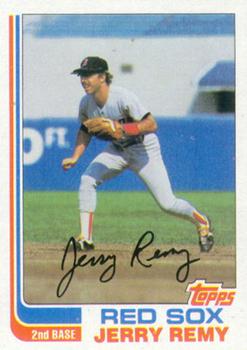
Gerald Peter Remy was born in November of 1952 in Fall River, Massachusetts, and he grew up in the Boston area. He attended Somerset High School in Somerset, Massachusetts, and he was drafted out of high school by the Washington Senators in the 1970 June draft. He did not sign with the Senators and matriculated at Roger Williams University in Bristol, Rhode Island. Perhaps college life did not suit Remy, because he signed with the California Angels in 1971 after being drafted by them in the January 1971 Secondary draft in the 8th round.
Remy moved reasonably quickly through the Angels system, punctuated by splitting his age 21 season of 1974 between Double-A El Paso for 2/3 of the year and Triple-A Salt Lake City for the remaining third. He hit the ball well -- though not with any home run power -- at every stop.
His career minor league totals show a slap hitter with good bat skills and improving bat control -- a slash line of .307/.359/.409, 144 walks and 276 strikeouts (but with 100 of those coming in one year in the California League at age 19) in 1878 plate appearances. Remy also showed decent speed but less-than-stellar base-running instincts: 95 Stolen Bases versus 43 times caught stealing.
Unsurprisingly, this is exactly the player that Remy was when he reached the major leagues with the Angels in 1975. He got on base at a decent clip, had a slugging percentage that hovered right around the same level as his OBP, and he got caught stealing more times than he should have for as often as he was running. For example, in his rookie year of 1975, Remy hit .258, had an OBP and a SLG of .311 each, stole 34 bases, but got caught stealing a league leading 21 times.
Remy enjoyed the early success with the Angels, but the Angels needed pitching if they were to contend with the Royals in the late 1970s American League West. For its part, the Red Sox were looking to improve at second base and upgrade from the 33-year-old Denny Doyle. So, after the 1977 season, the Red Sox sent promising 22-year-old pitcher Don Aase to the Angels for 24-year-old Remy.
Moving back home to Boston, Remy responded immediately with his one and only All-Star season in 1978. The future looked bright for both Remy and the Red Sox -- despite the Bucky Dent game.
Everything changed for Remy on July 1, 1979. The second-place Red Sox faced their bitter rival Yankees at Yankee Stadium. Remy hit a triple to lead off the game, and he tried to score when Rick Burleson hit a pop-up down the right-field line that Yankee second baseman Willie Randolph tracked down. According to one article, Remy had no chance to score on the play, but he tried anyway and, on the slide into home, Remy tore up his knee badly.
Jim Rice came onto the field and carried Remy off:
Remy hardly played in 1979 after the injury, and he appeared in only 63 games in 1980. He played two full seasons after the injury -- 1982 and 1983 (though playing 88 games in the strike-shortened 1981 season has to be considered as a full season too). He had had three knee operations by the time 1984 rolled around, and could only make it through one month of the 1984 season before shutting it down. In spring training in 1985, Remy visited the Red Sox' team physician, Dr. Arthur Pappas, and after that appointment, made the decision to retire at the age of 32.
This Is Radio Clash
The Clash is one of my favorite bands -- one I've liked since 1982 and Combat Rock. The song "This Is Radio Clash" was released in late 1981 and made its impact on the rock music charts in 1982. I am going to use it to highlight those players who have gone on to careers in broadcasting.
To most people, Jerry Remy is more known now for being the television analyst on Red Sox games on NESN. He has worked in broadcasting since 1988 as the color commentator for Red Sox games.
Louisiana Cookin'
Remy is an entrepreneur who has made a good living since his baseball career ended by leveraging his Bostonian background, playing days, and on-air commentating into a number of different ventures. He's written a bunch of Red Sox-related books (see below), for example. In addition, he is the "President of Red Sox Nation" which, apparently, was based on some kind of voting among Red Sox fans.
But, relevant to our culinary category, Remy owns several eateries in the Boston area. He has a hot dog stand on Yawkey Way called "RemDawgs," he operates "Jerry Remy's Sports Bar and Grill" at three locations, including at Fenway Park, in Fall River, and at Logan International Airport. Perhaps oddly, there is a separate website for a fourth location at Boston Seaport.
The World According to Garp
Remy has authored a number of books related to baseball. One series of books is for kids and follows the "journeys" of Red Sox mascot Wally the Green Monster. Those titles are Wally the Green Monster and His Journey Through Red Sox Nation!, Hello Wally!, A Season with Wally the Green Monster, Coast to Coast with Wally the Green Monster, and Wally the Green Monster and His World Tour. Ball Four it's not.
A second book, which Remy has updated four times as far as I can tell, was first published in 2004 and updated most recently in 2008. It is titled Watching Baseball: Discovering the Game within the Game.
Remy's final book on Amazon is Red Sox Heroes: The RemDawg's All-Time Favorite Red Sox, Great Moments, and Top Teams.
I have not read these books, but feel free to chime in if you have.
A Few Minutes with Tony L.
In the early 1980s, I didn't really care about Remy that much. Now, I disliked Rick "The Rooster" Burleson and had fear about what would happen next when guys like Jim Rice and Dwight Evans stepped to the plate. But Remy was sort of innocuous to me as a fan because he was not a guy who was going to hit the ball out of the park and beat you. That said, he really enjoyed playing against Milwaukee over his career -- a .300 batting average, 15 stolen bases (though he was caught 10 times), and a .340 OBP.
Yet, those numbers are skewed by how he absolutely destroyed Milwaukee in his home parks. In Milwaukee County Stadium, Remy hit just .264 with a .301 OBP. His career numbers -- including his good batting average -- were helped substantially by his performances in Boston. Fenway in the early 1980s was a much better hitters' park than a lot of the stadiums around the league, and Remy took full advantage.
There is one item that lingers today when talking about Jerry Remy, and that is his son Jared Remy. In recent months, Jerry's role as the Red Sox color commentator has been called into question by the fact that Jared is accused of killing the mother of one his children, Jennifer Martel. The Boston Globe recently printed a stunning story portraying Jared Remy as a steroid-addled, serial domestic abuser whose father's money was able to buy the best lawyers to get Jared out of trouble on multiple occasions -- nearly 20, in fact. As one paragraph stated:
JARED REMY WAS THE KING of second chances. A review of hundreds of pages of court files and police records revealed accounts that he terrorized five different girlfriends starting when he was 17, and that courts repeatedly let him off with little more than probation and his promise to stay out of trouble. He rarely did.
A second quote puts some of the blame on Jerry Remy -- at least indirectly -- for this series of lenient decisions happening:
"This is an old story for the American judicial system. You get a high-priced attorney, you get better justice," said [Joshua E.] Friedman, the former Lowell prosecutor. "If he had been Jared Smith from a well-off family, he may have gotten the same result."
But he was not Jared Smith. He was the son of the man recognized as the president of Red Sox Nation, Jerry Remy -- the home-grown infielder-turned-broadcaster and air-guitar-playing commercial pitchman, best-selling author, and restaurant impresario revered as "The RemDawg."
I do not place blame on Jerry Remy's door for what his son did or even for how courts treated his son. Yes, you get a better lawyer and you get a better result. It works that way in many types of cases -- both civil and criminal. Sure, Jerry Remy and his wife should have done a better job of raising their son so as to keep him off steroids.
And, I totally agree that the Remy family should have taught their son that treating other people -- not just women, but everyone -- with respect is a requirement to being a human being. Finally, the Remy family failed to teach their son that violence is not the proper way to solve one's problems.
All that said, if Jared Remy did stab and kill Jennifer Martel -- I have not followed the story, know nothing about it other than what I've read for this write-up, and have no opinion on his guilt and innocence -- the one responsible for that is Jared Remy and the one who will be punished for it is Jared Remy.
Yet, if Jerry is any kind of parent, he must feel anguish over this incident for the rest of his life.